Invoice Finance: The working capital solution more SMEs should consider
Derek Ryan, CEO for North West Europe at Bibby Financial Services, explores how Invoice Finance can support SMEs at every stage of the business lifecycle.
5 October 2026
SMEs have spent the last few years navigating inflation, higher borrowing costs, wage pressures and economic uncertainty. Despite this, as we move towards the final quarter of the year, signs of renewed confidence are starting to emerge. Bibby Financial Services’ Q3 Confidence Tracker research of 1,000 UK SMEs found that 60 percent of business owners believe the UK economy is set up for future growth, an increase of 5 percent compared to Q1.
To turn this renewed optimism into action, SMEs are seeking support from the new Government. A reduction in Corporation Tax, commitment of no further tax rises, and a reversal of the employer National Insurance Contribution increases introduced in 2025 are the top three wishes of incoming Chancellor John Healey when he delivers his inaugural Autumn Budget this October.
Yet, while SMEs certainly have appetite for growth, cashflow remains a key challenge. According to our research, on average SMEs have over £72,000 owed to them in unpaid invoices, an increase of 13 percent compared to 2025. Compounding this pressure, three fifths (60%) say customers are taking longer to pay. The adjacent issue of bad debt also remains a persistent challenge. Almost a third (32%) say they’ve suffered a bad debt in the past 12 months, a marginal uplift from 6 months ago, with the average sum written off standing at £30,000.
These pressures are also evident across supply chains, with the impact going beyond individual business. Indeed, 63 percent of businesses have seen a supplier become insolvent in the last six months, while a similar proportion are seeing customers fail over the same period.
When growth creates a cashflow challenge
With almost half of SMEs identifying attracting new customers as an opportunity, the appetite for growth is evident. But taking advantage of growth opportunities creates an immediate need for working capital. Winning new customers, larger orders and bigger contracts can all require businesses to fund payroll, stock, materials and other costs before income is generated.
Gone are the days when banks are the first and only port of call for businesses, and taking on additional debt isn’t necessarily the answer. For many, the better solution may lie in unlocking the cash that’s tied up in work they have completed. This is where Invoice Finance can play an important role.
BFS recently supported Mercia Electrical, a business which had grown to around £3m turnover and was continuing to secure more work. But, 30-60 day payment terms had created a gap between completing this work and receiving payment.
Managing Director, Matt Ede, initially considered a loan before his broker introduced him to Invoice Finance. The facility allowed Mercia’s cashflow to flex with the business, helping to pay wholesalers and staff on time, and giving greater confidence to tender for larger projects. Matt said: “We’ve seen some excellent growth in the last couple of years, and the support of Bibby has allowed me to have the confidence to go out there and tender for larger projects than I would have done previously.”
For every stage of the business lifecycle
Invoice Finance can support SMEs at every stage, from start-ups through to mature, well-established businesses.
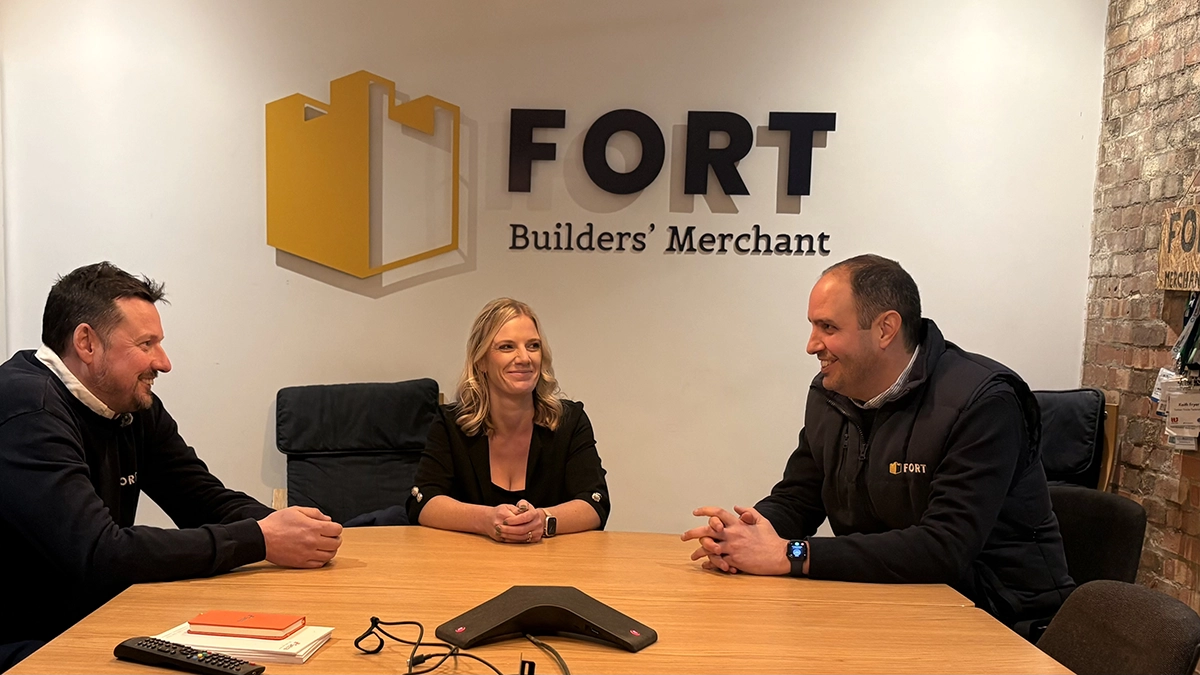
Our client, Fort Builders Merchants, started trading in 2020 with no trading history. Having been unable to secure the loans they sought from banks, we worked with the founders to understand their business plan and ambitions, and considered their previous experience. Invoice Finance provided working capital to meet bills from the outset and, as Fort grew, its facility grew alongside it. Fast forward to today, and having that access to capital has enabled the business to purchase the freehold of its site and invest in vehicles and staff.
Invoice Finance shouldn’t be viewed solely as a temporary solution. Whilst it can help address an immediate funding need, it can also evolve with a business, supporting its development as well as periods of business change. Our client, TM Steels, has used Invoice Finance for 25 years, from its first £80 order to regularly receiving orders worth more than £100,000 today. More recently, our facility financed the business through its transition to an Employee Ownership Trust, while our relationship has expanded to include Foreign Exchange as TM Steels moved into global markets.
These three businesses are very different, but together they demonstrate the breadth of what Invoice Finance can unlock. Providing funding to a new-start, enabling an ambitious company to continue its growth trajectory, and evolving alongside an established business through investment and change.
Changing the perceptions of Invoice Finance
Despite the breadth of its uses, awareness of Invoice Finance remains low. Half of SMEs believe banks are less prepared to lend to businesses like theirs, so it’s increasingly important that businesses understand the wider funding options available to them.
At the same time, 91 percent of SME owners say human expertise is essential or important when making complex or high-value financial decisions, highlighting the important role intermediaries play.
As an industry, we have a collective responsibility to continue building awareness of Invoice Finance and challenge outdated perceptions of when and why it should be used. Invoice Finance can be much more than just a response to cashflow difficulty; it can be a strategic tool that helps businesses turn ambition into growth.
At BFS, we’re ready and willing to play our part in helping more businesses access the funding and support they need to grow. We’ve done so for over four decades and with more than £1bn in funding available, we have both the expertise and capacity to help.